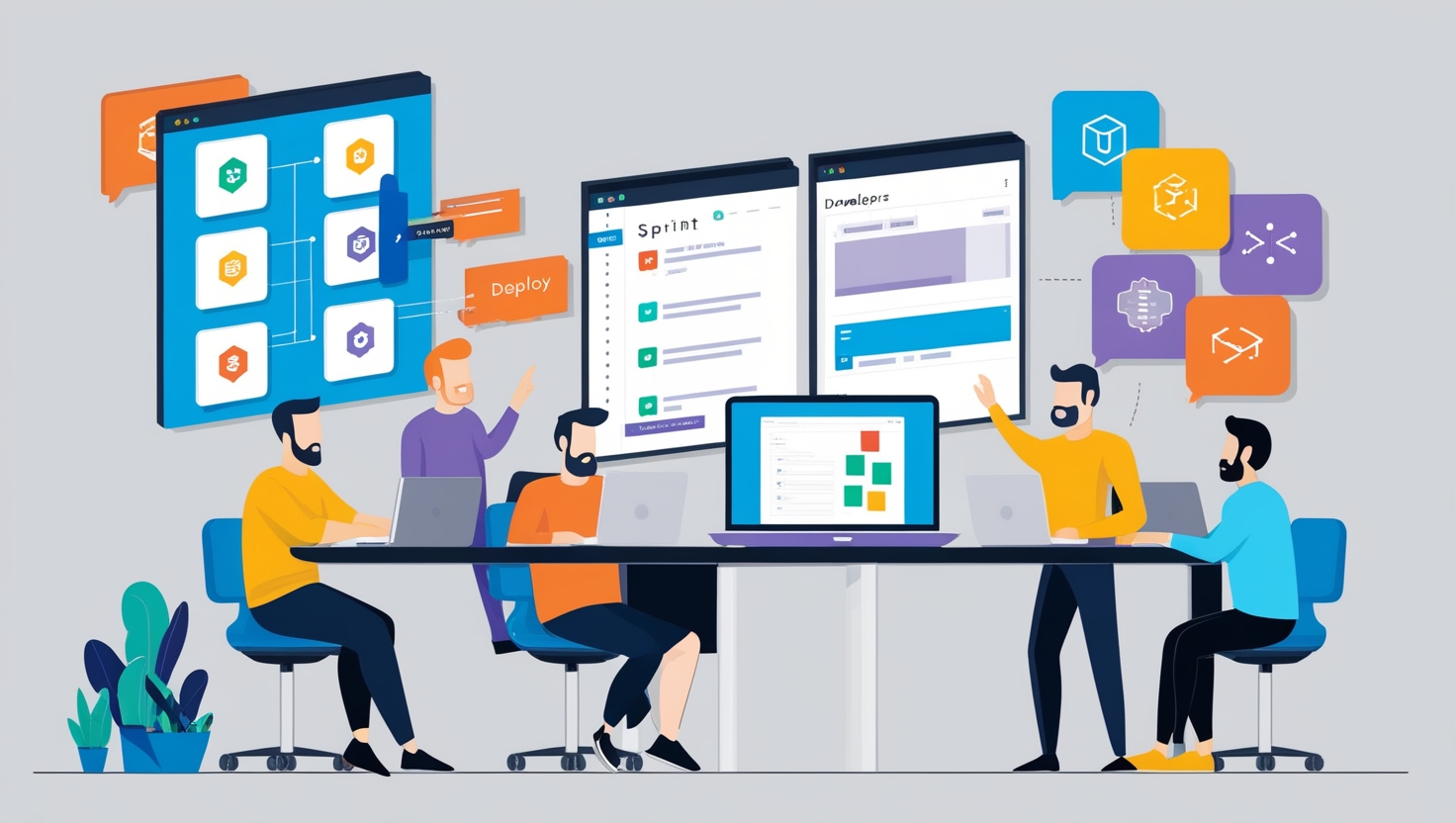
What is Agile Development?
Agile development is an iterative approach to software development that helps teams deliver value to their customers faster and with fewer headaches. Instead of a single, long development cycle, Agile breaks projects into small, manageable units of work called sprints or iterations. This allows for continuous feedback, adaptation, and improvement.
Core Principles of Agile
The Agile Manifesto outlines four core values:
- Individuals and interactions over processes and tools
- Working software over comprehensive documentation
- Customer collaboration over contract negotiation
- Responding to change over following a plan
These values emphasize flexibility, collaboration, and delivering tangible results.
Agile in Full-Stack Development
Applying Agile to full-stack projects means integrating both frontend and backend development into the same iterative cycles.
1. Cross-Functional Teams
Agile thrives on cross-functional teams where developers can work on both frontend and backend tasks. This reduces handoffs, improves communication, and ensures a holistic understanding of the project.
2. Vertical Slices
Instead of building the entire frontend and then the entire backend, Agile encourages building "vertical slices" of functionality. This means developing a small, end-to-end feature (from UI to database) in each sprint. This approach allows for early testing and feedback on complete features.
3. Continuous Integration and Deployment (CI/CD)
Automate your build, test, and deployment processes. CI/CD pipelines ensure that code changes are frequently integrated and tested, reducing integration issues and enabling rapid deployment of new features.
4. Regular Communication and Feedback
Daily stand-ups, sprint reviews, and retrospectives are crucial.
- Daily Stand-ups: Quick meetings to synchronize activities and identify impediments.
- Sprint Reviews: Demonstrate completed work to stakeholders and gather feedback.
- Retrospectives: Team meetings to reflect on the past sprint and identify areas for improvement in processes.
5. User Stories and Backlog Prioritization
Break down features into user stories (e.g., "As a user, I want to log in so I can access my dashboard"). Maintain a prioritized product backlog, ensuring the most valuable features are developed first.
Benefits for Full-Stack Projects
- Faster Time-to-Market: Deliver working software incrementally.
- Higher Quality: Continuous testing and feedback loops lead to fewer bugs.
- Adaptability: Easily pivot to new requirements or market changes.
- Improved Collaboration: Enhanced communication within the team and with clients.
- Reduced Risk: Early identification of issues and course correction.
Conclusion
Agile development provides a robust framework for managing the complexities of full-stack projects. By embracing its principles, teams can build high-quality, scalable applications more efficiently, ensuring client satisfaction and project success.